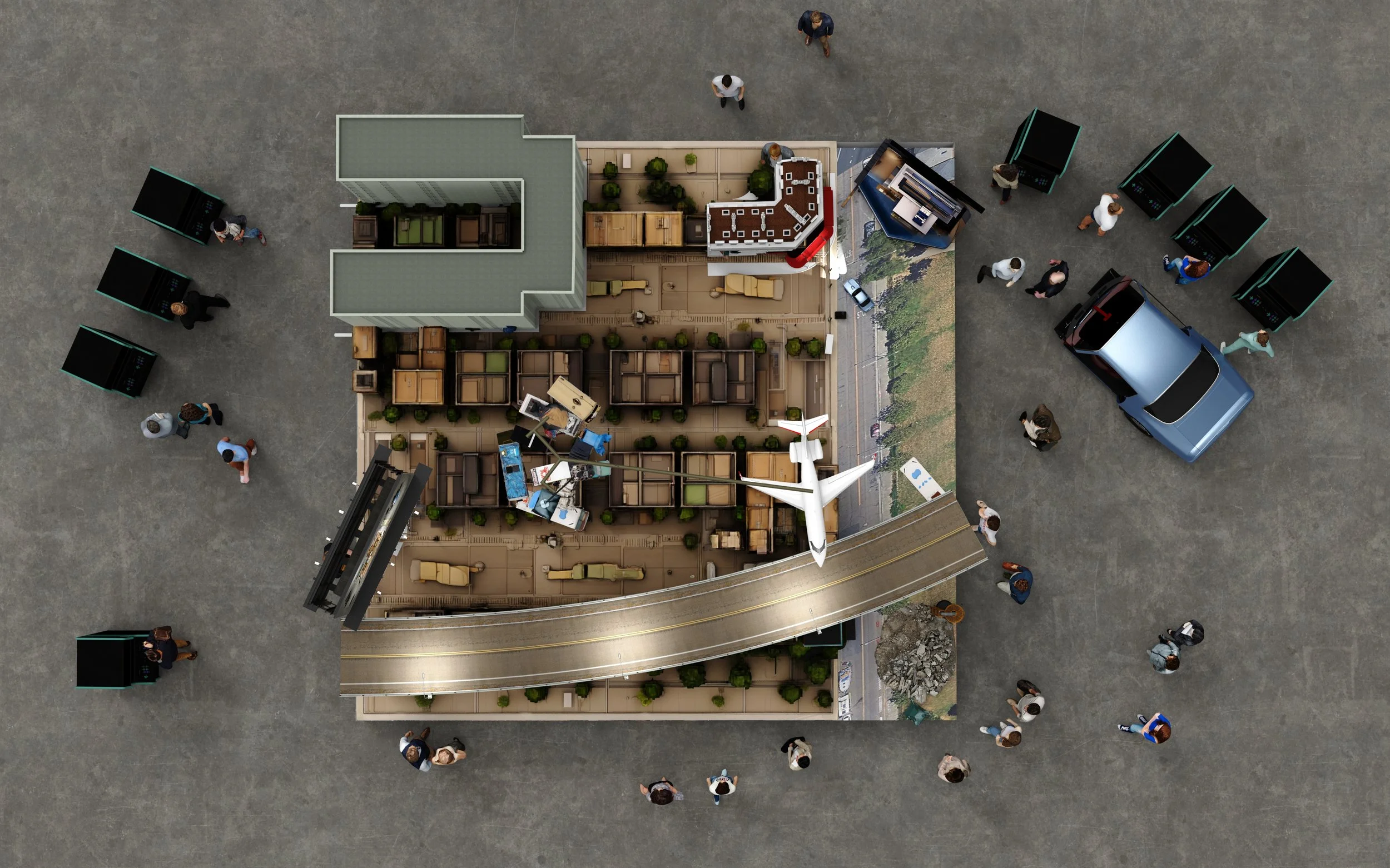
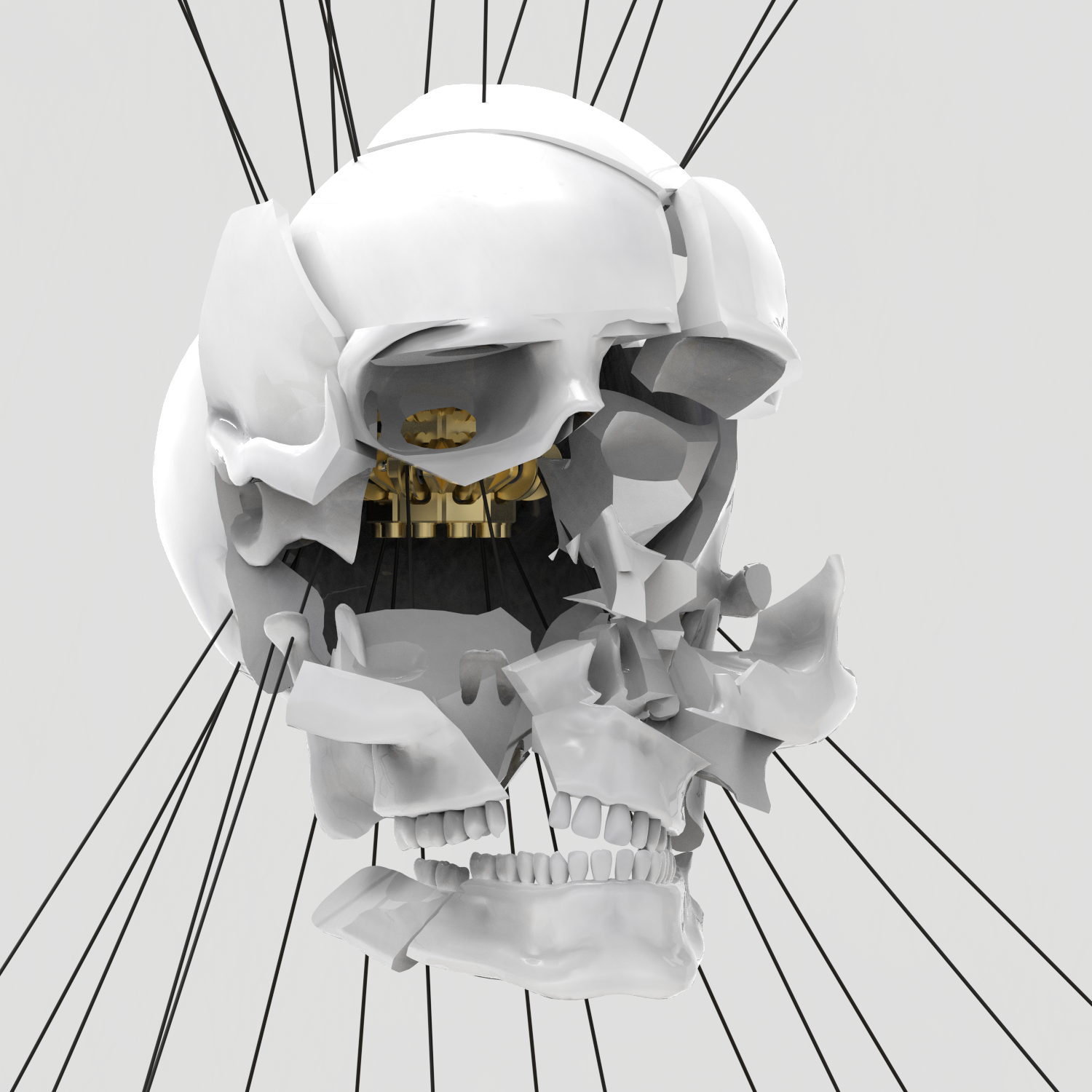
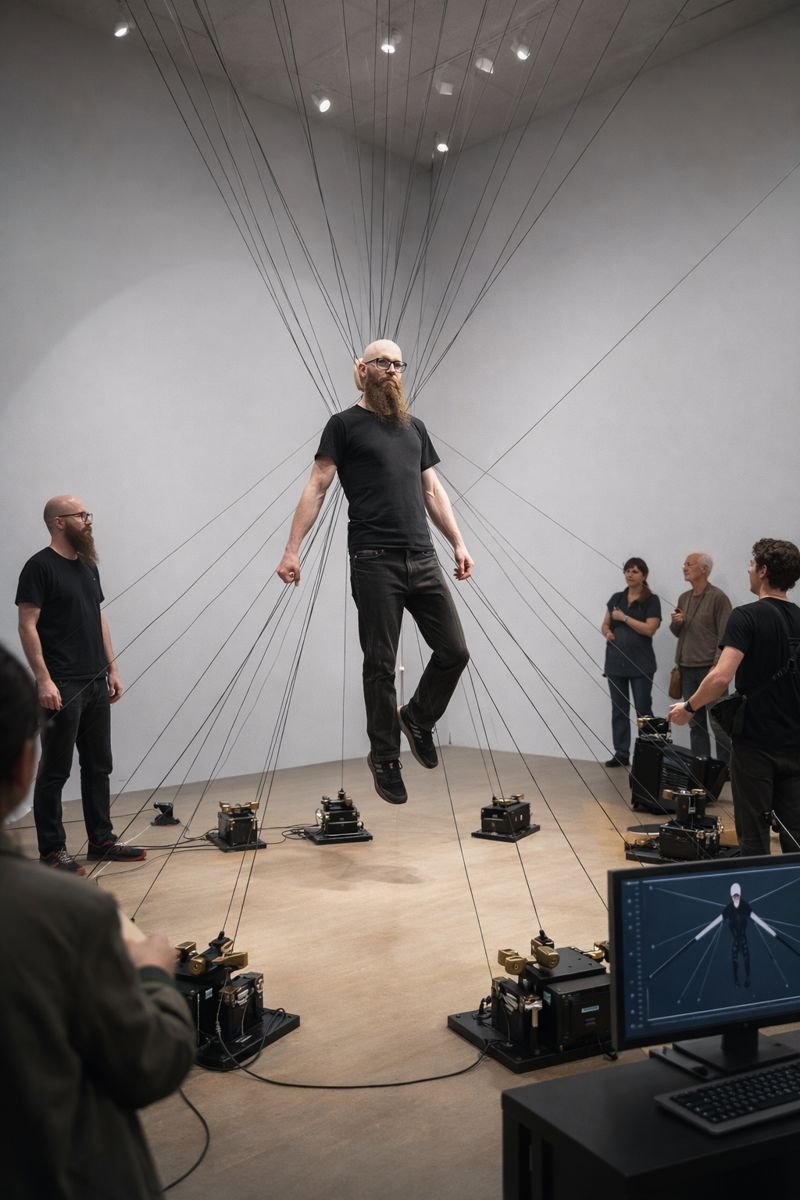
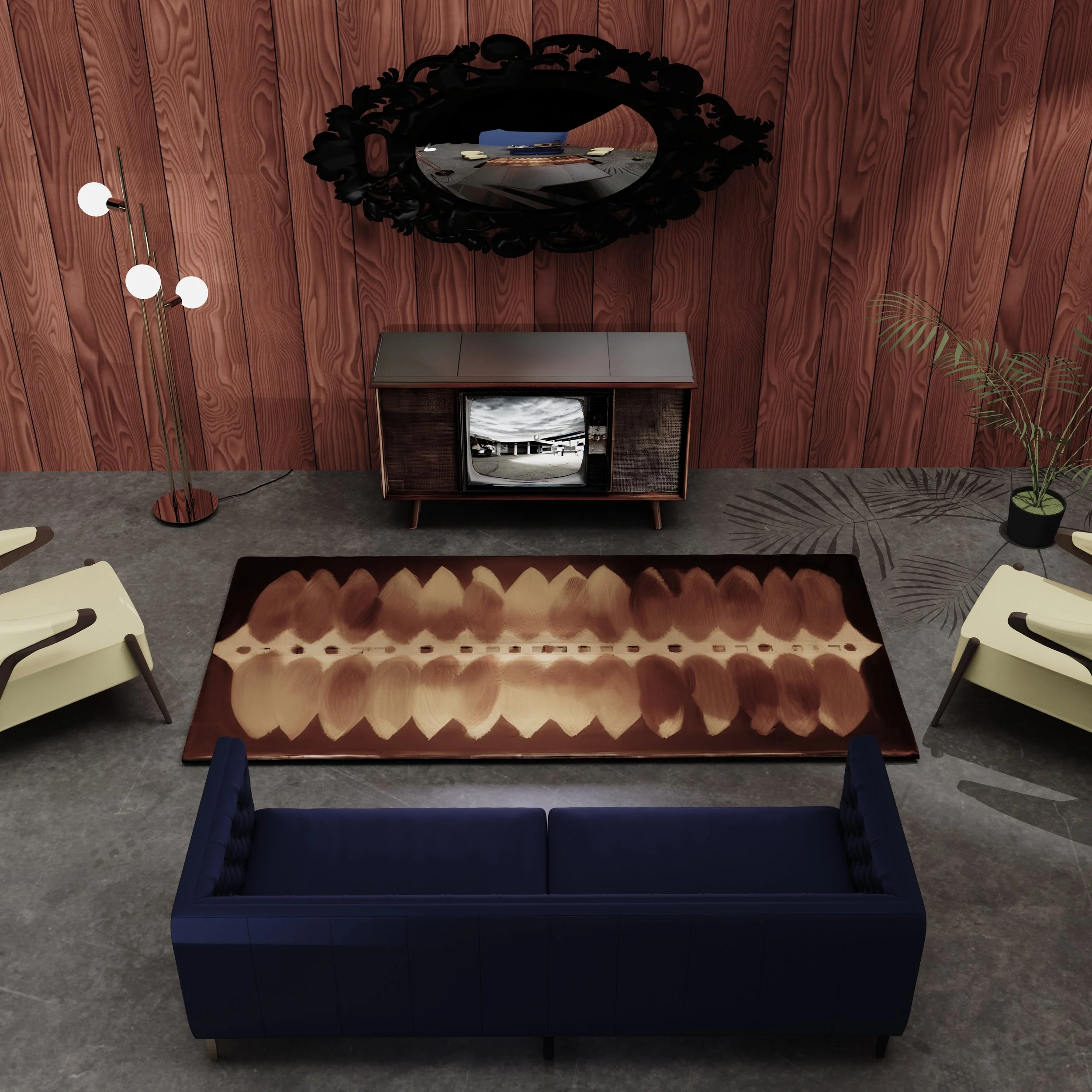
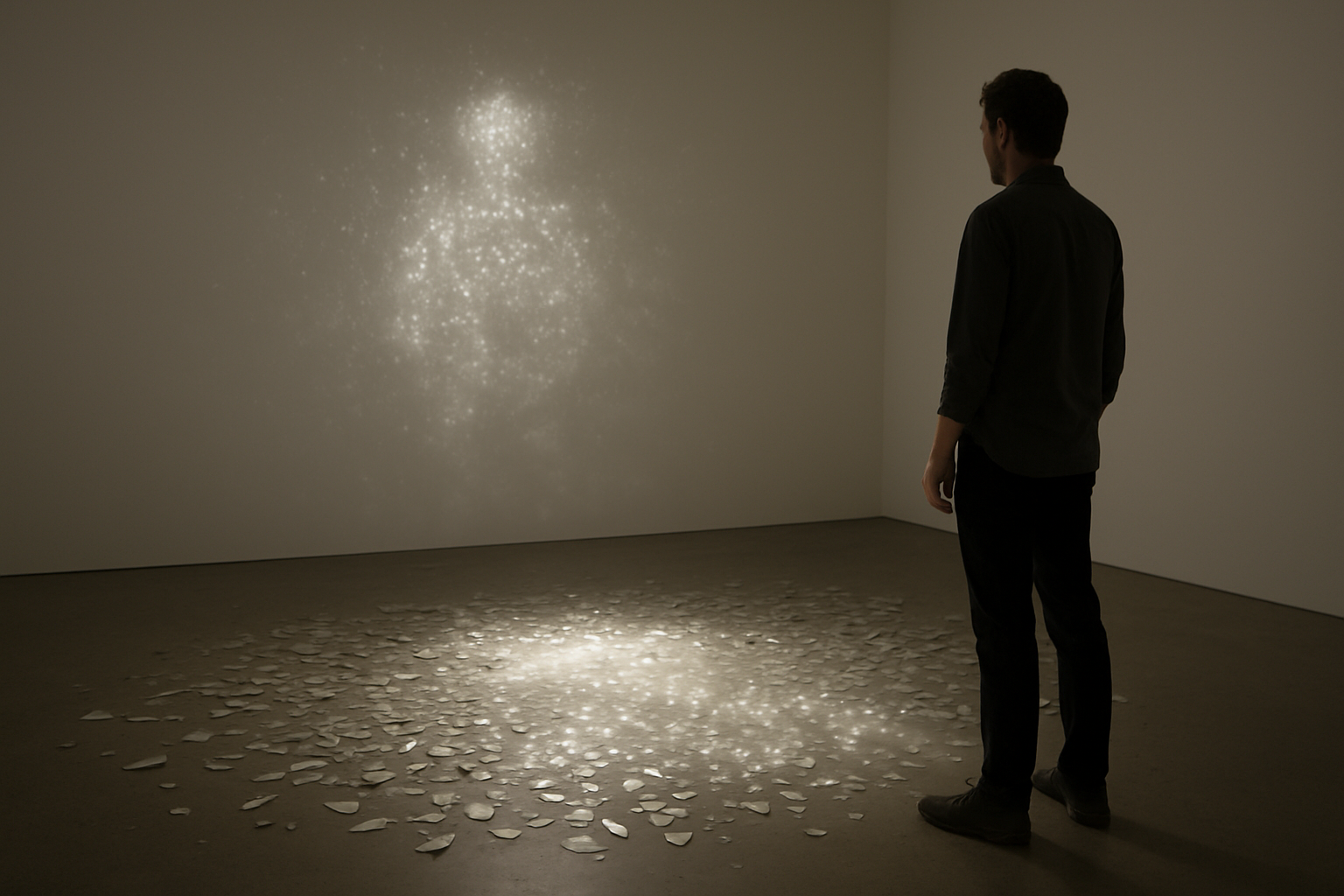
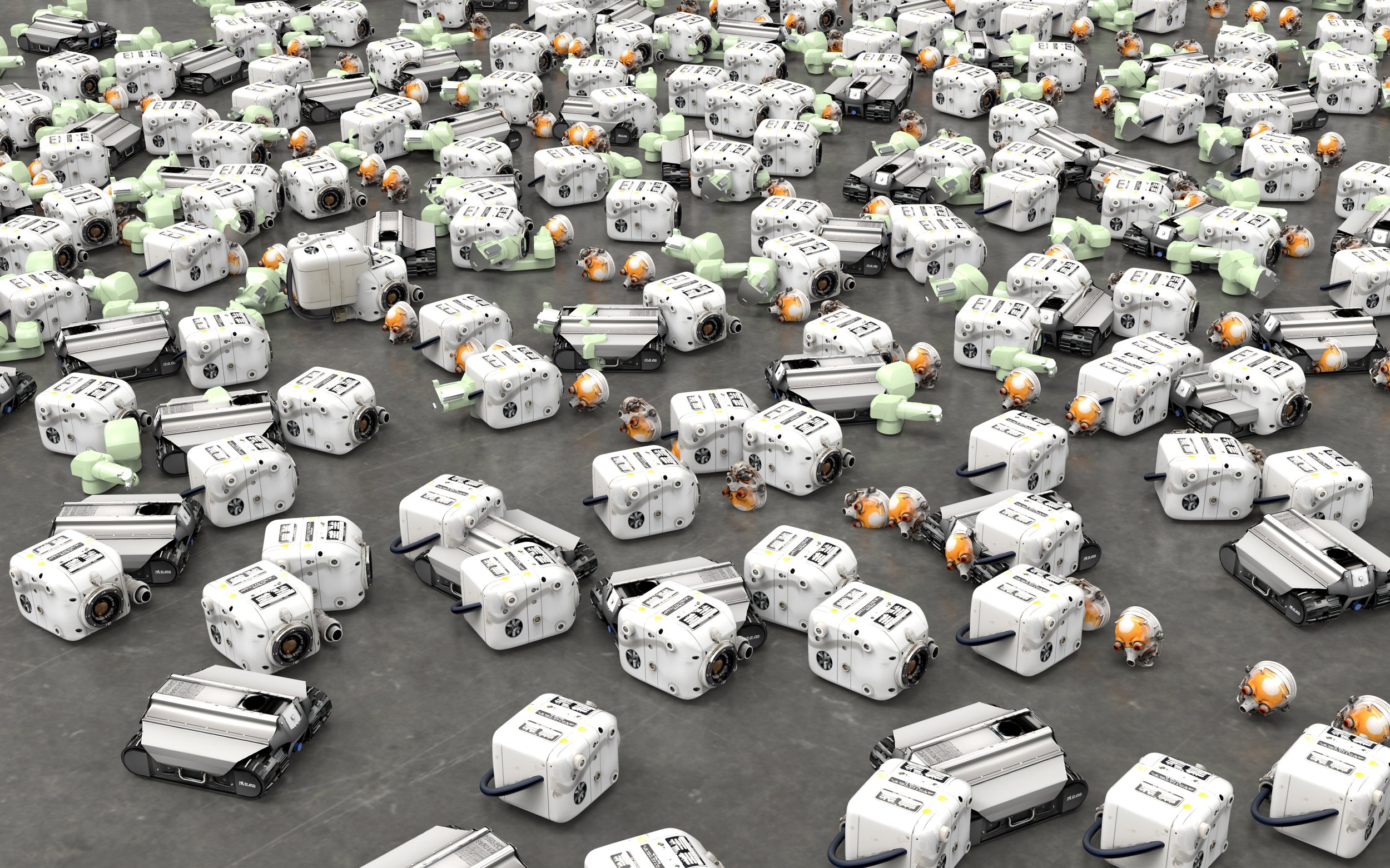
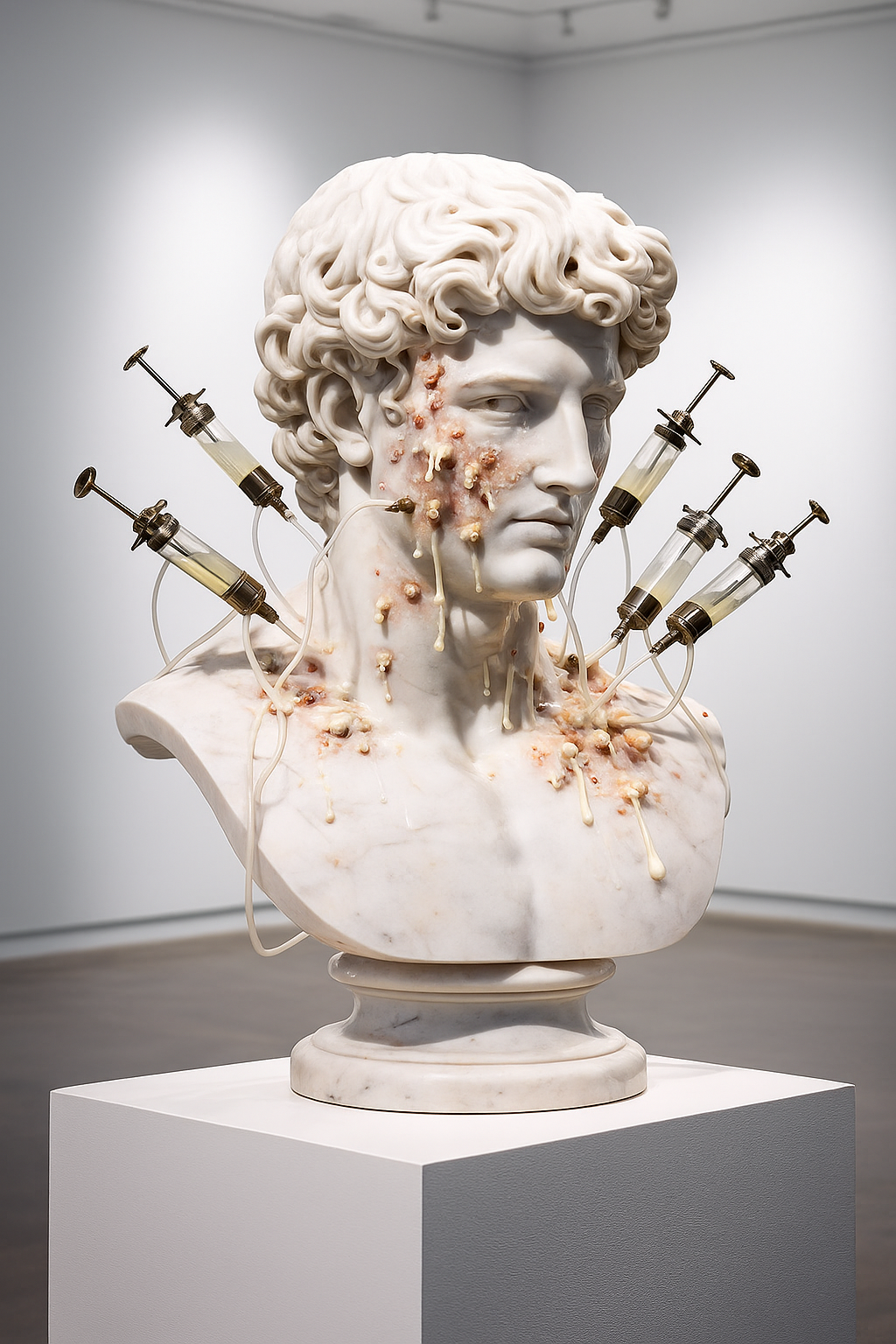
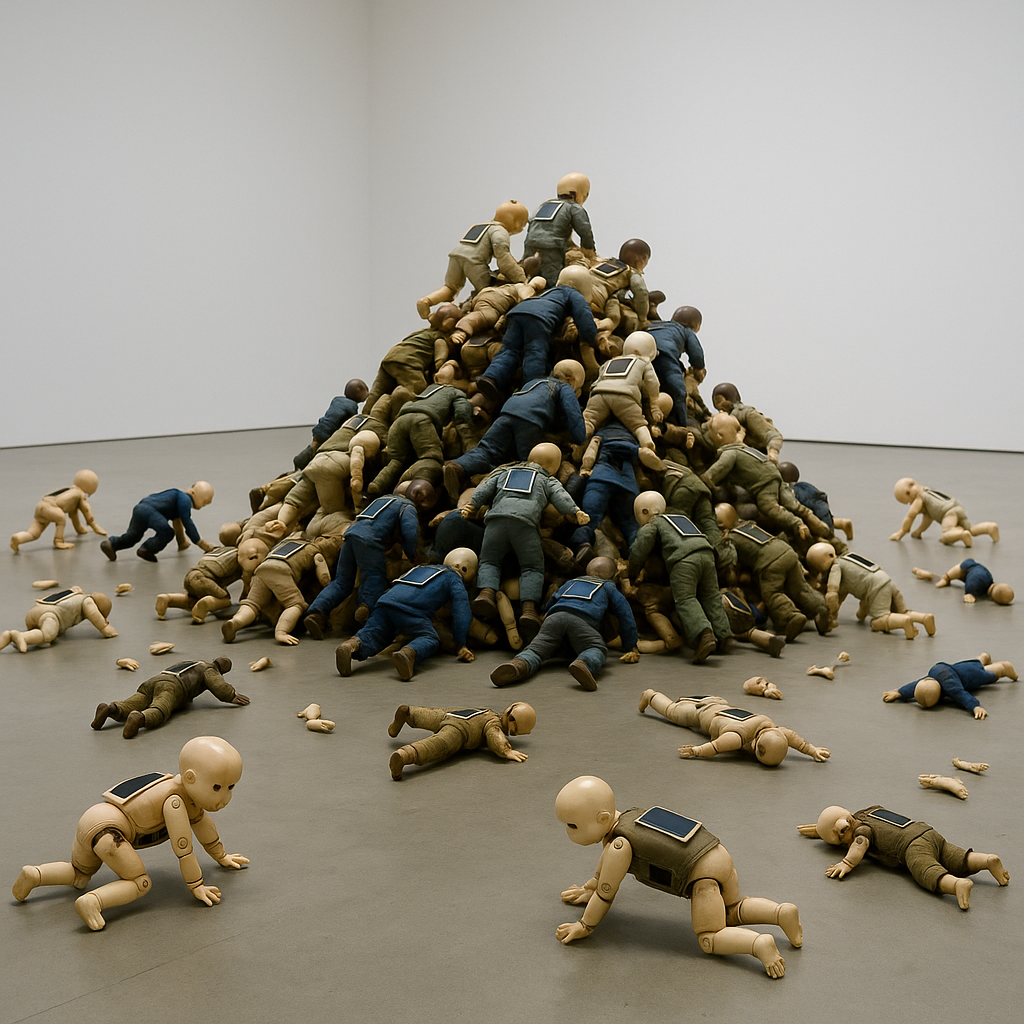
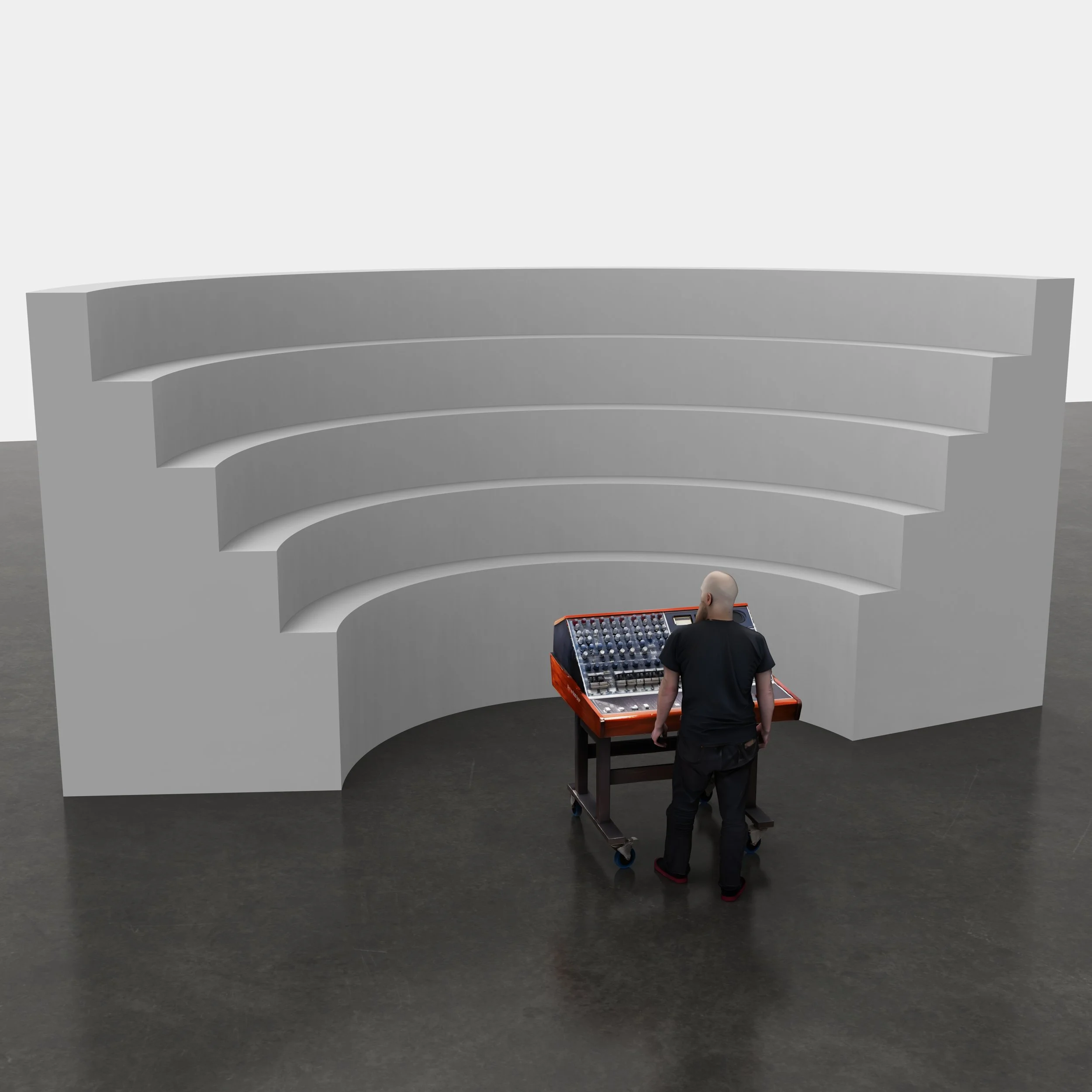
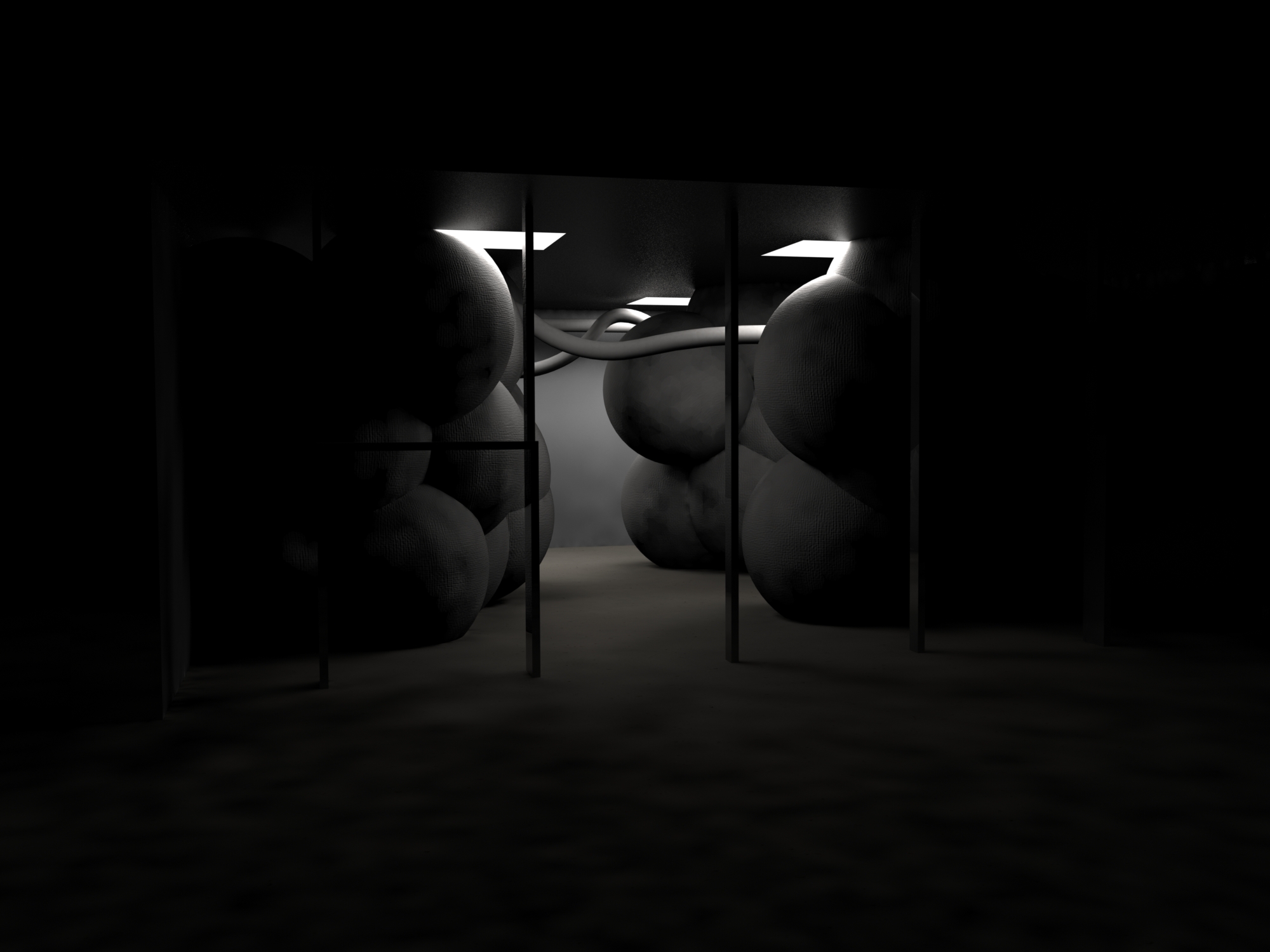
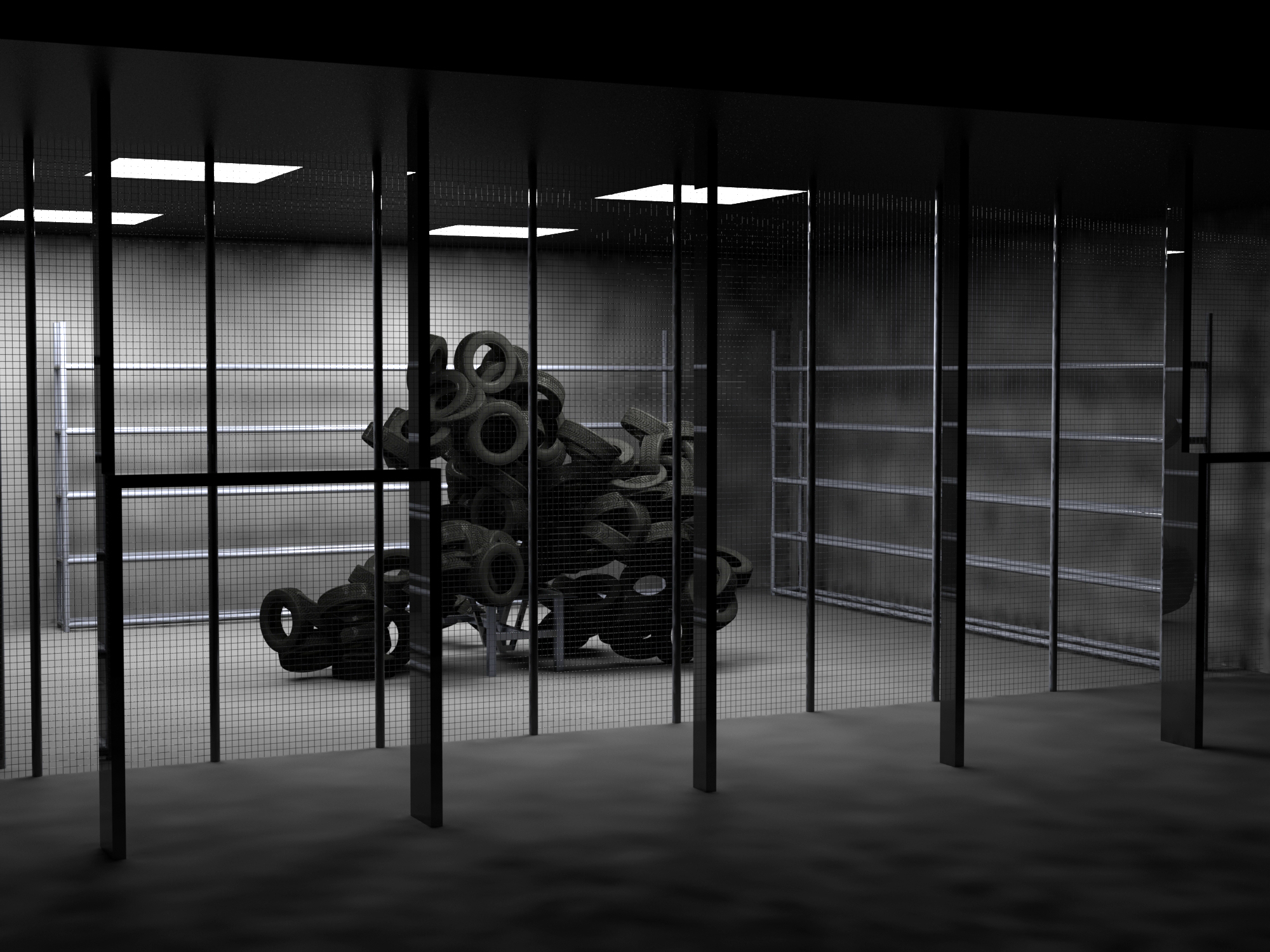
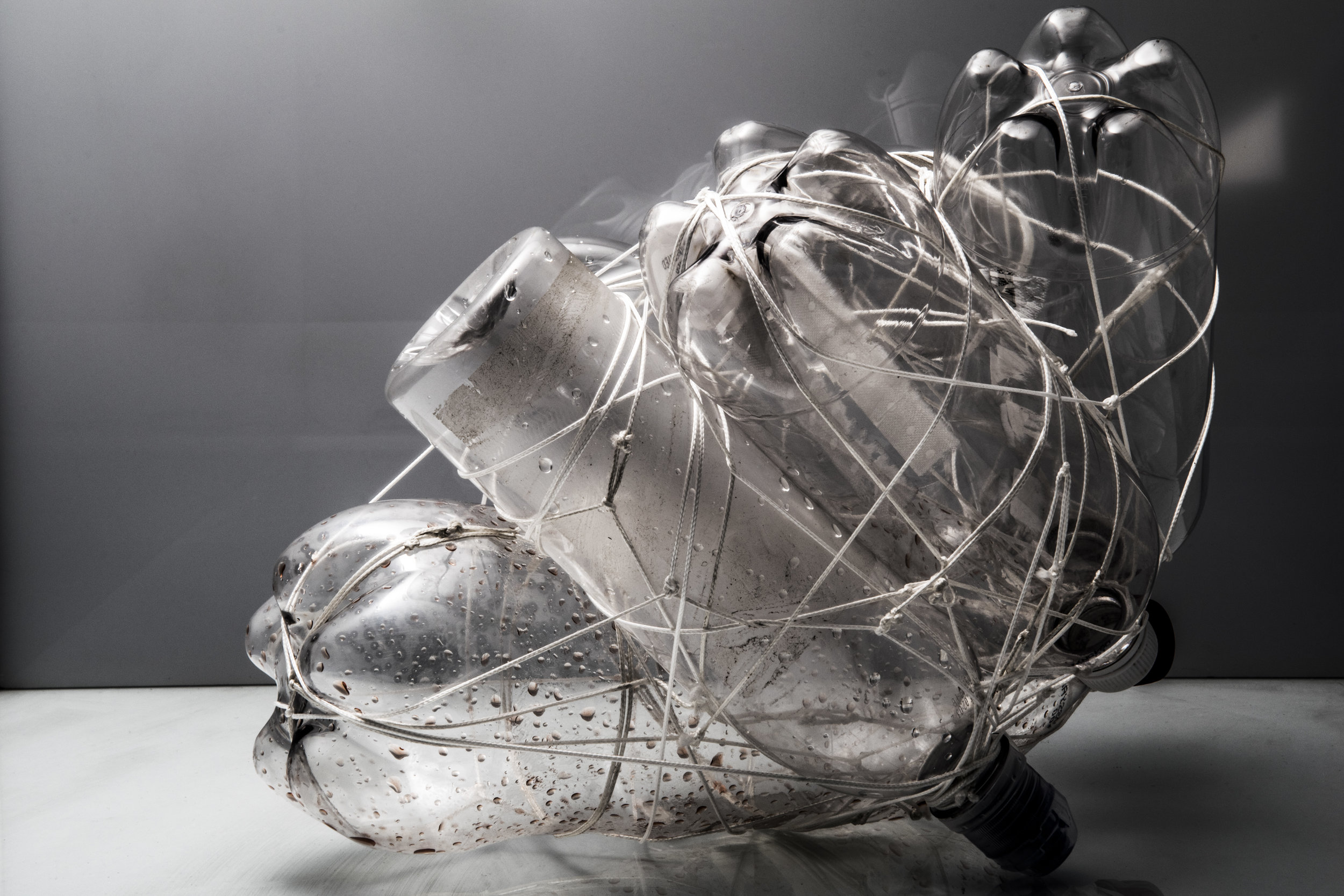
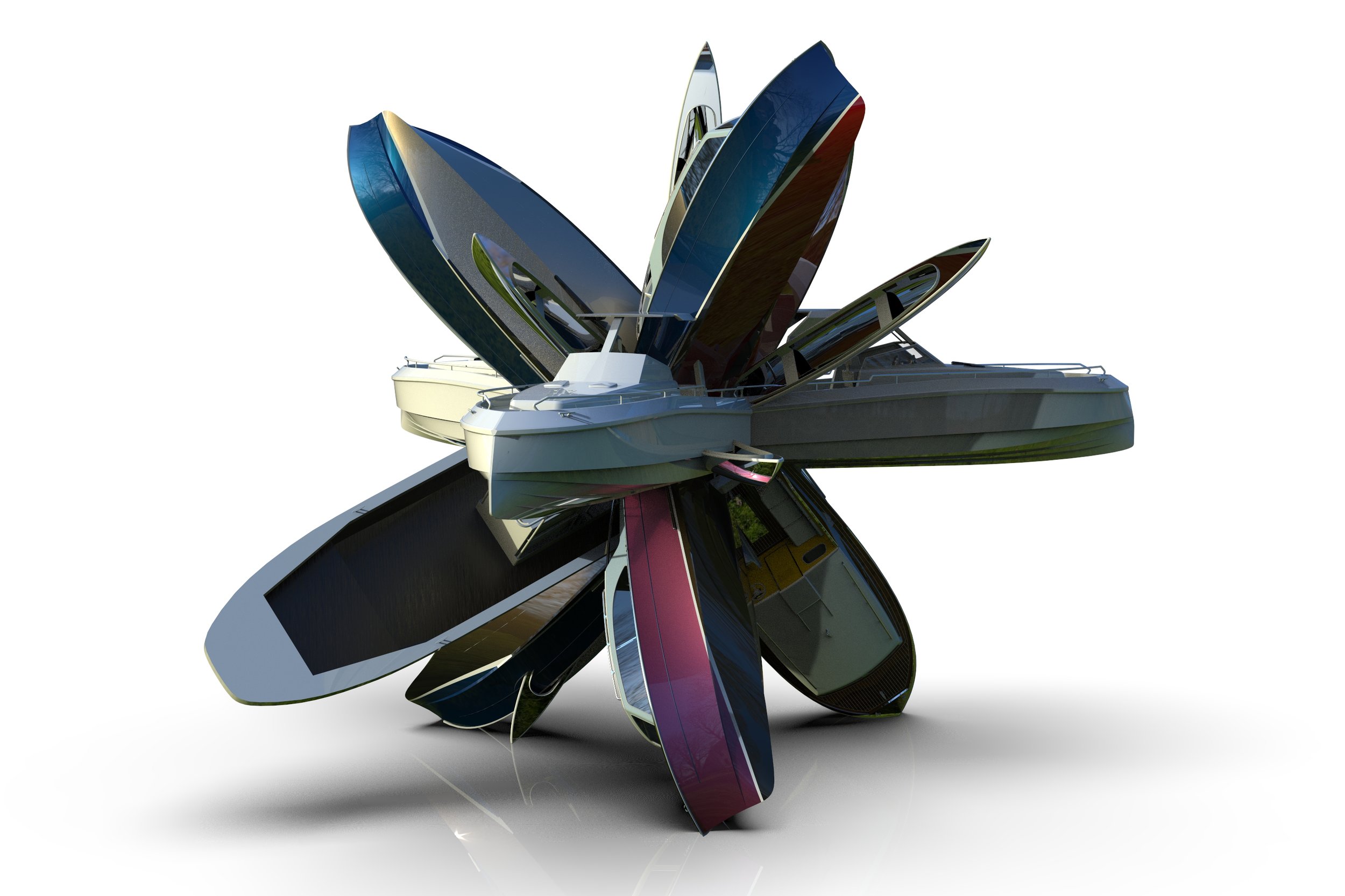
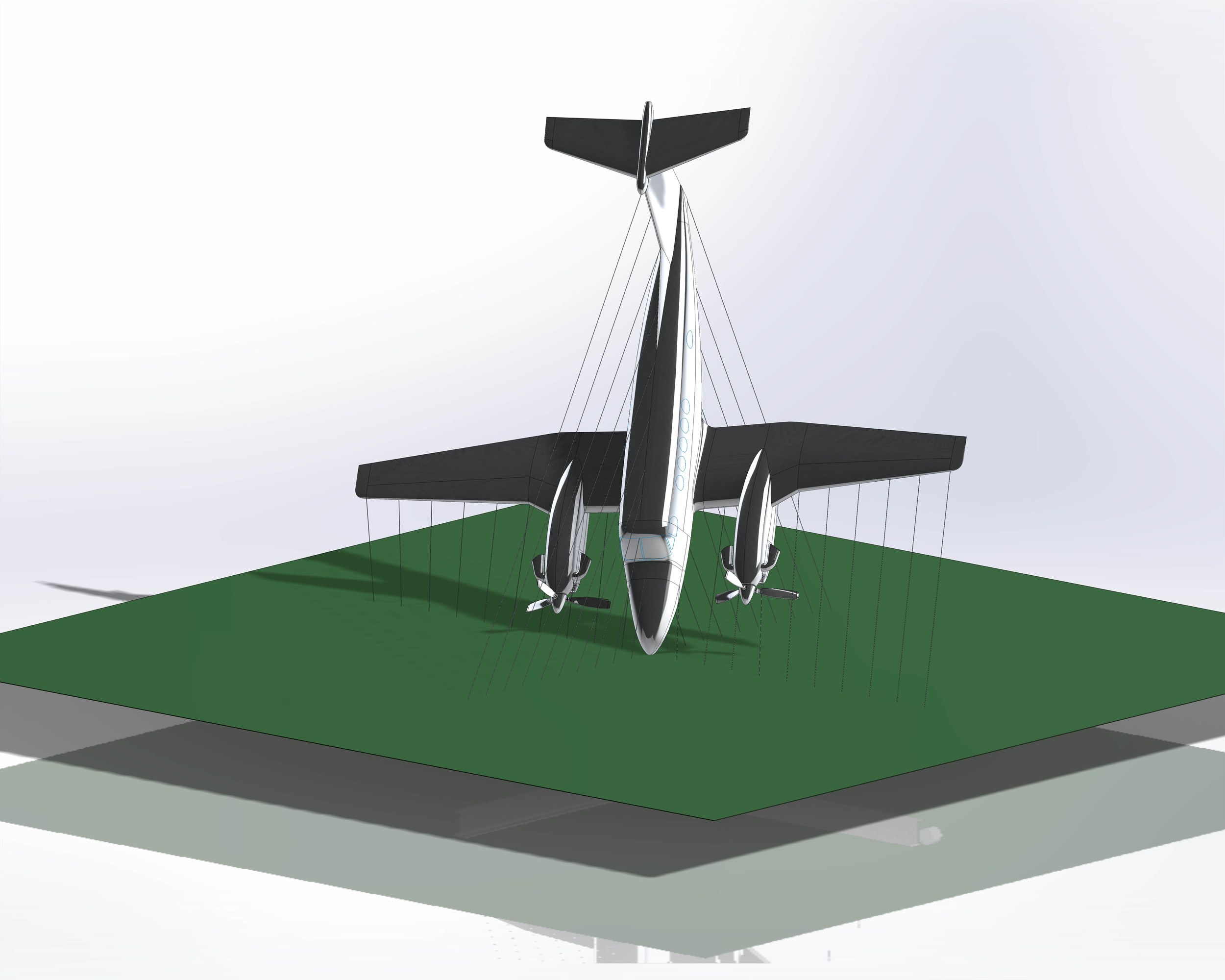
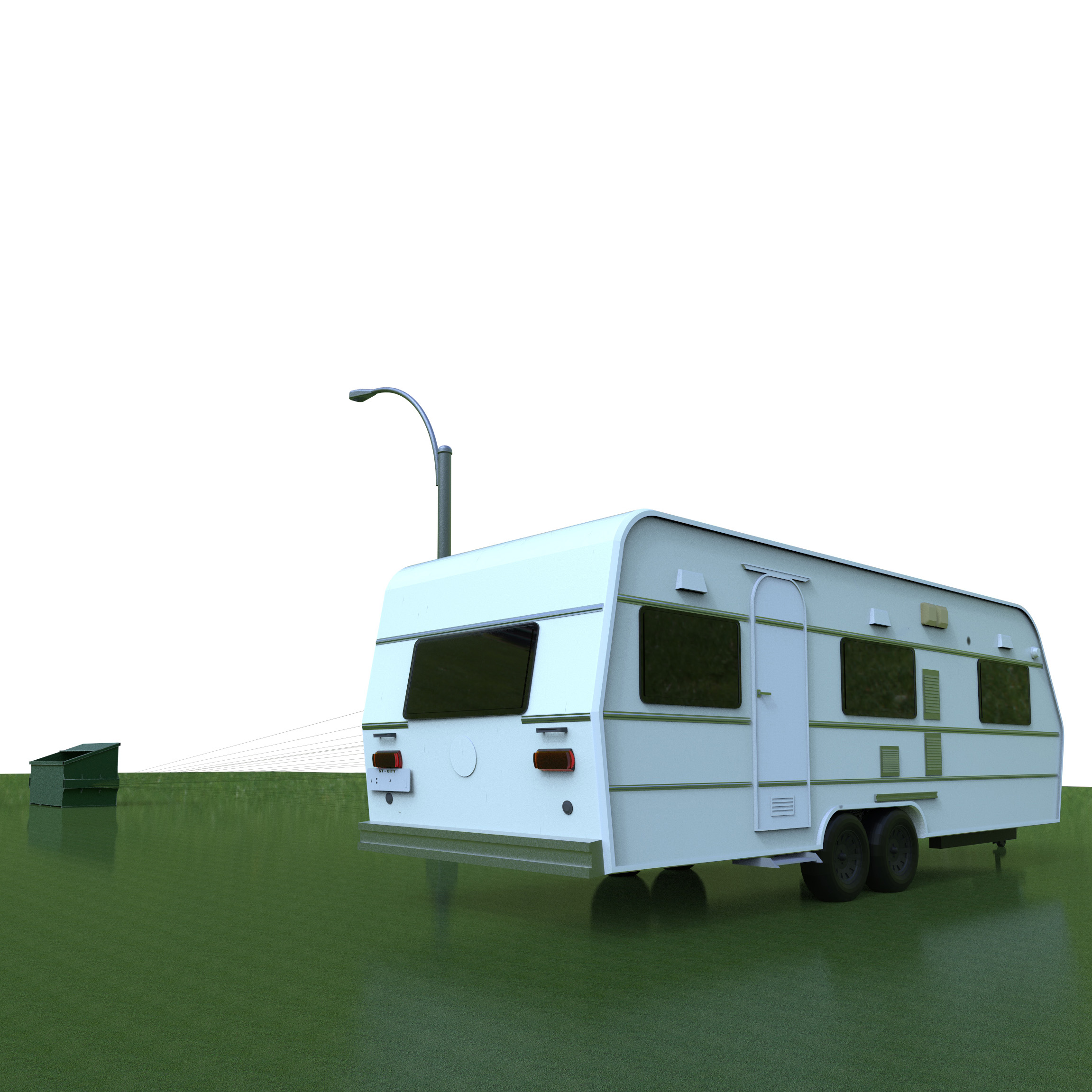
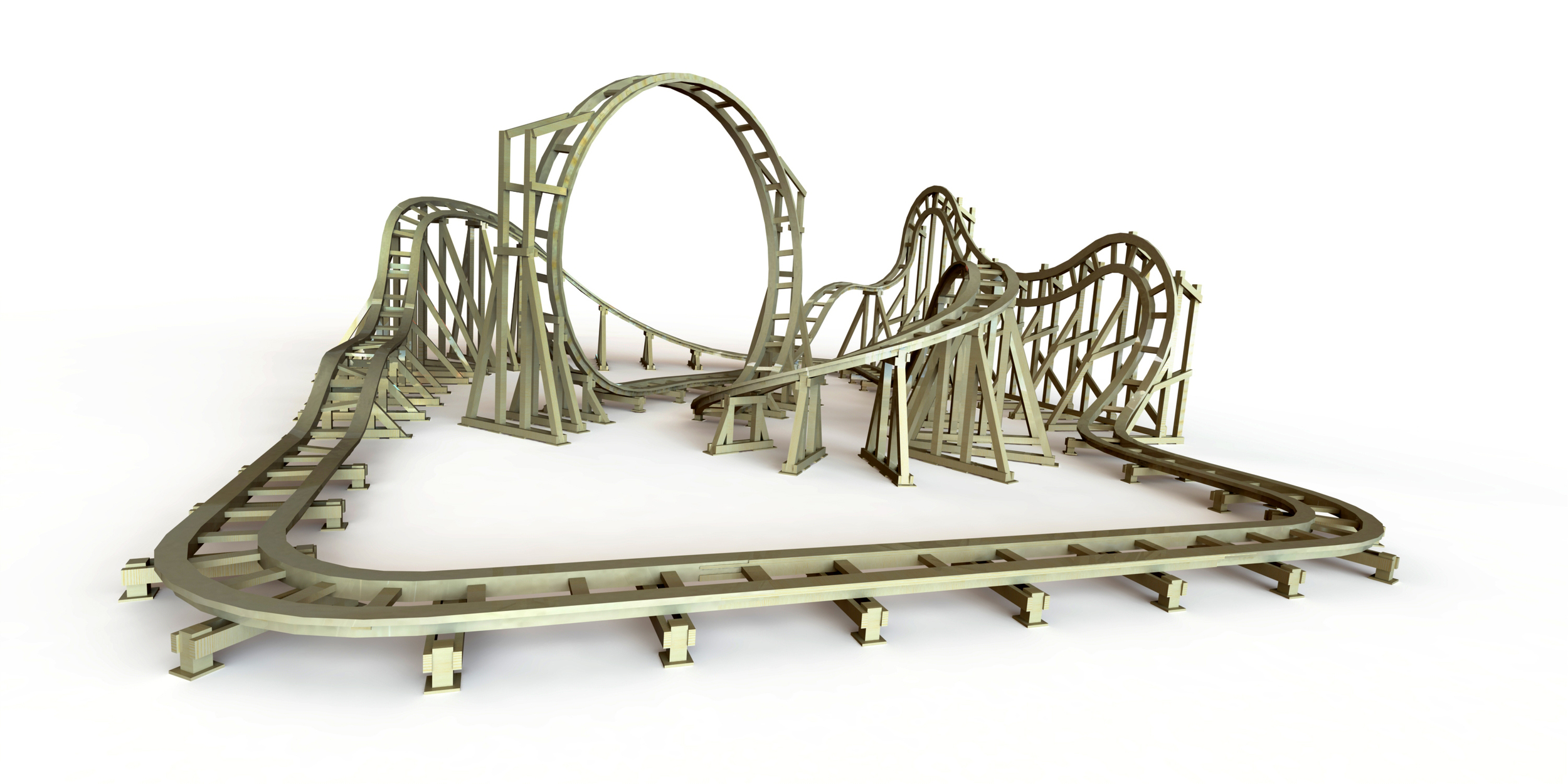
This group of works starts from a simple premise: we don’t just live in the world, we play it into shape. Games, shows, devices, and social rituals all act as small machines for organizing attention, trust, desire, and power. These proposals each build a different kind of “play space” where those forces become visible: a city that wears the scars of its players, a pile of light-fed climbers, a mirror made of trash, a body choreographed by many hands, a bust that everyone is invited to “improve.”
Rather than offering one big, finished story, each piece is a partial world with clear rules and open outcomes. Visitors step into systems that feel familiar, performance, gaming, therapy, self-image, worship, and discover that the ground is a bit skewed. Feedback loops are exposed, resources are visibly finite, and the mechanics of approval, beauty, and belief are pushed into the foreground. The works don’t ask people to suspend disbelief; they ask them to notice how belief is built in the first place.
Together, these projects treat play as a serious tool: a way to rehearse how realities are assembled, maintained, and quietly broken down. They are designed to run for months, accumulating traces of use and choice, so that by the end of an exhibition what remains is not a pristine object but a record of many people trying to navigate the same unstable rules.