TV Show
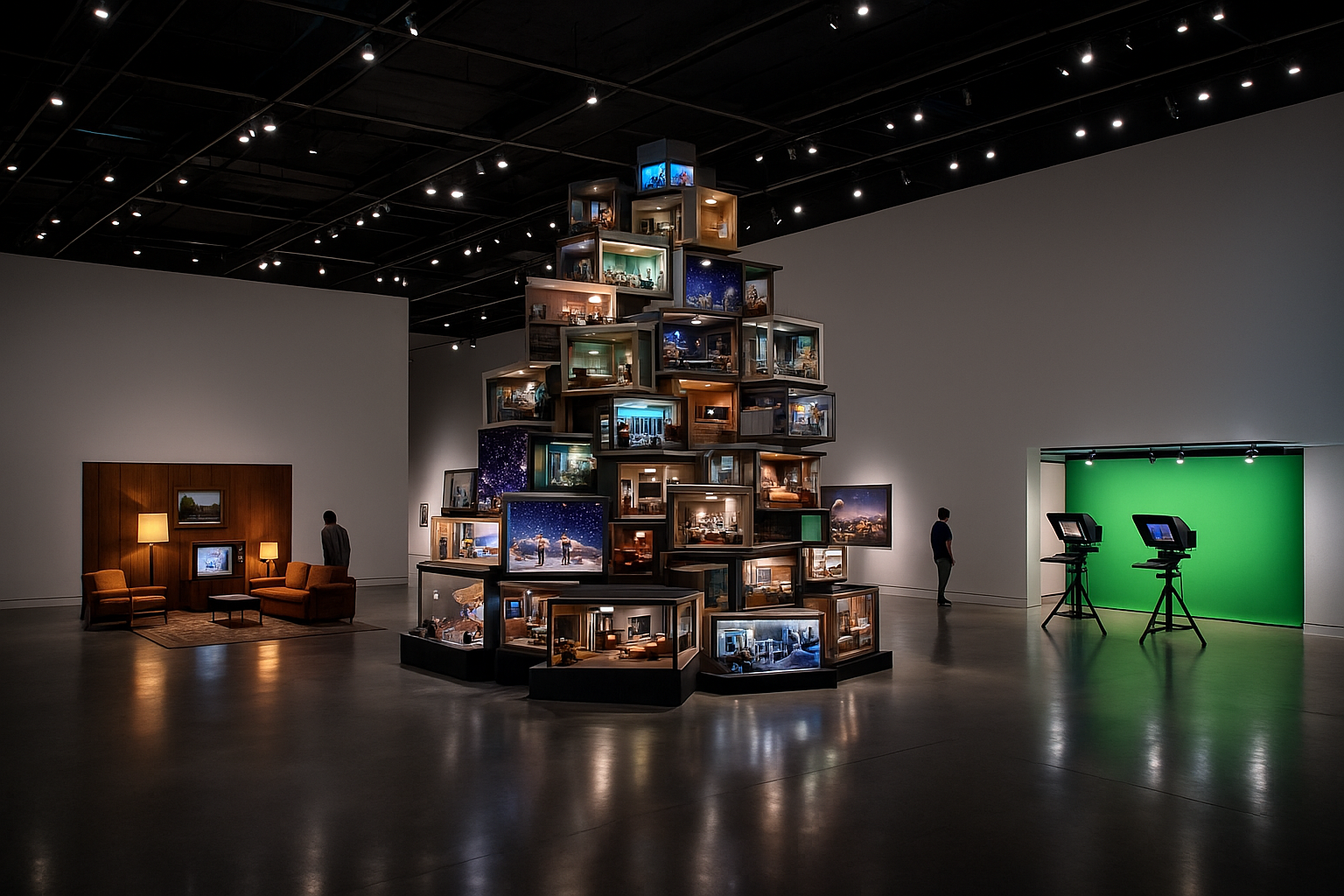
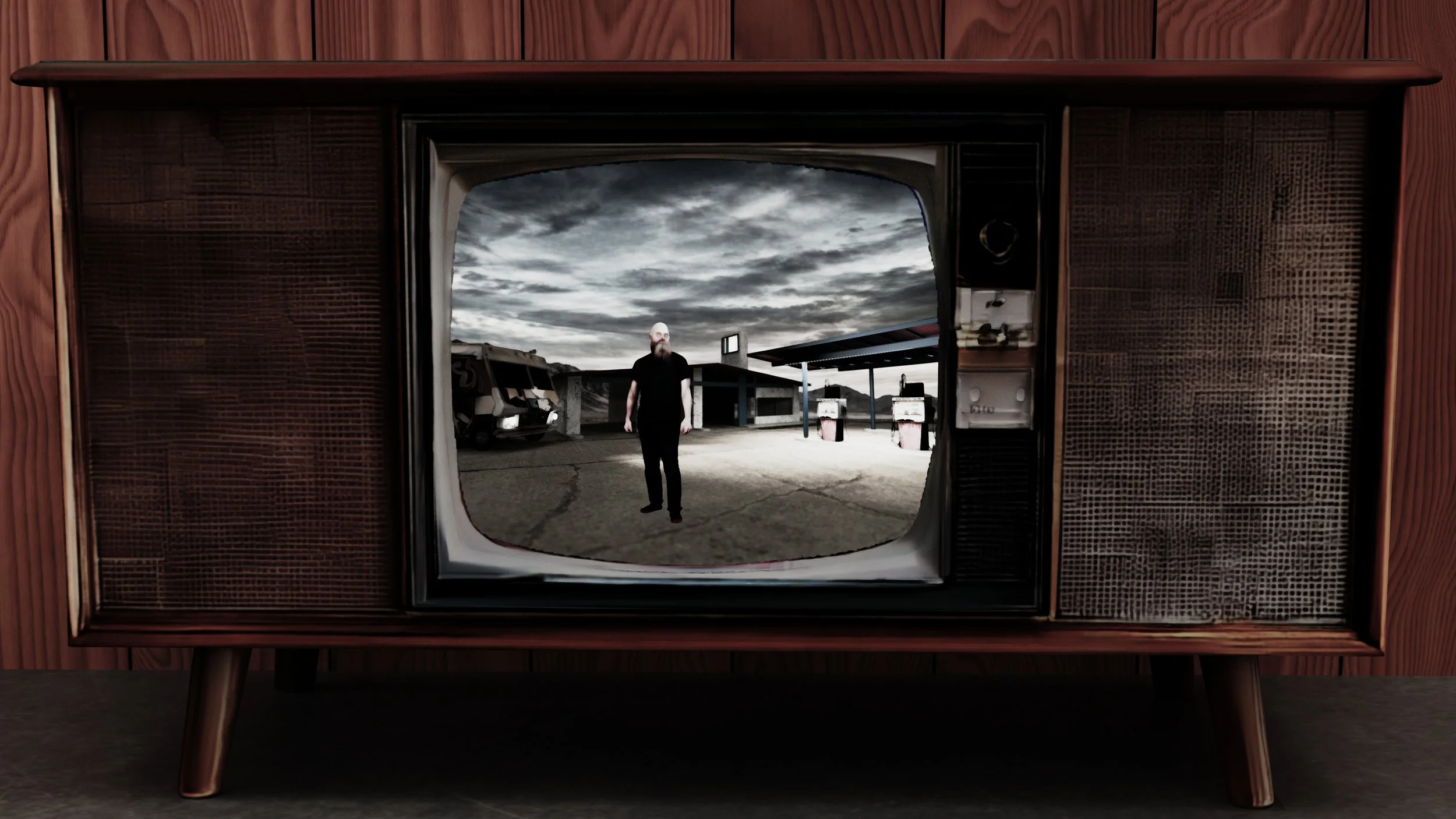
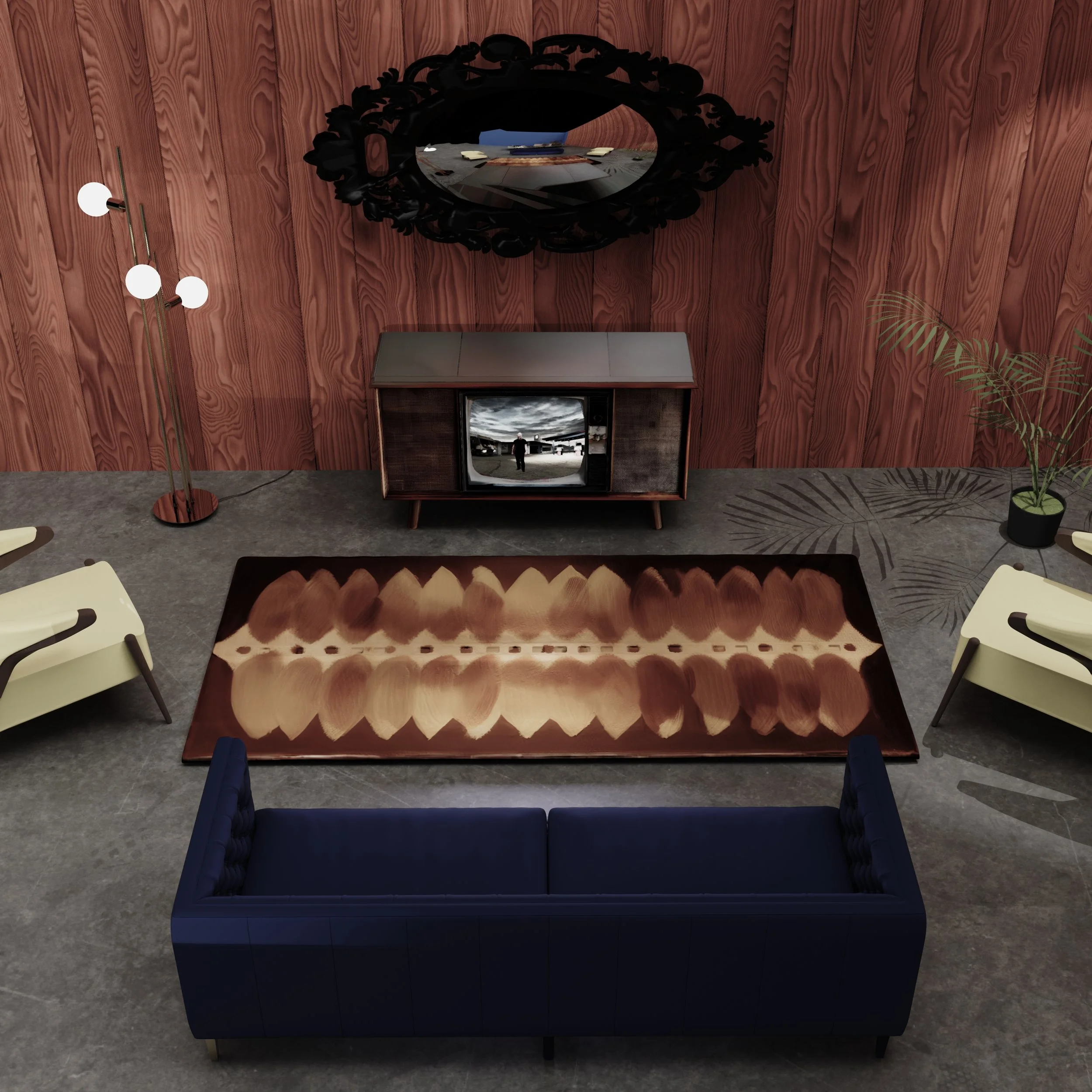
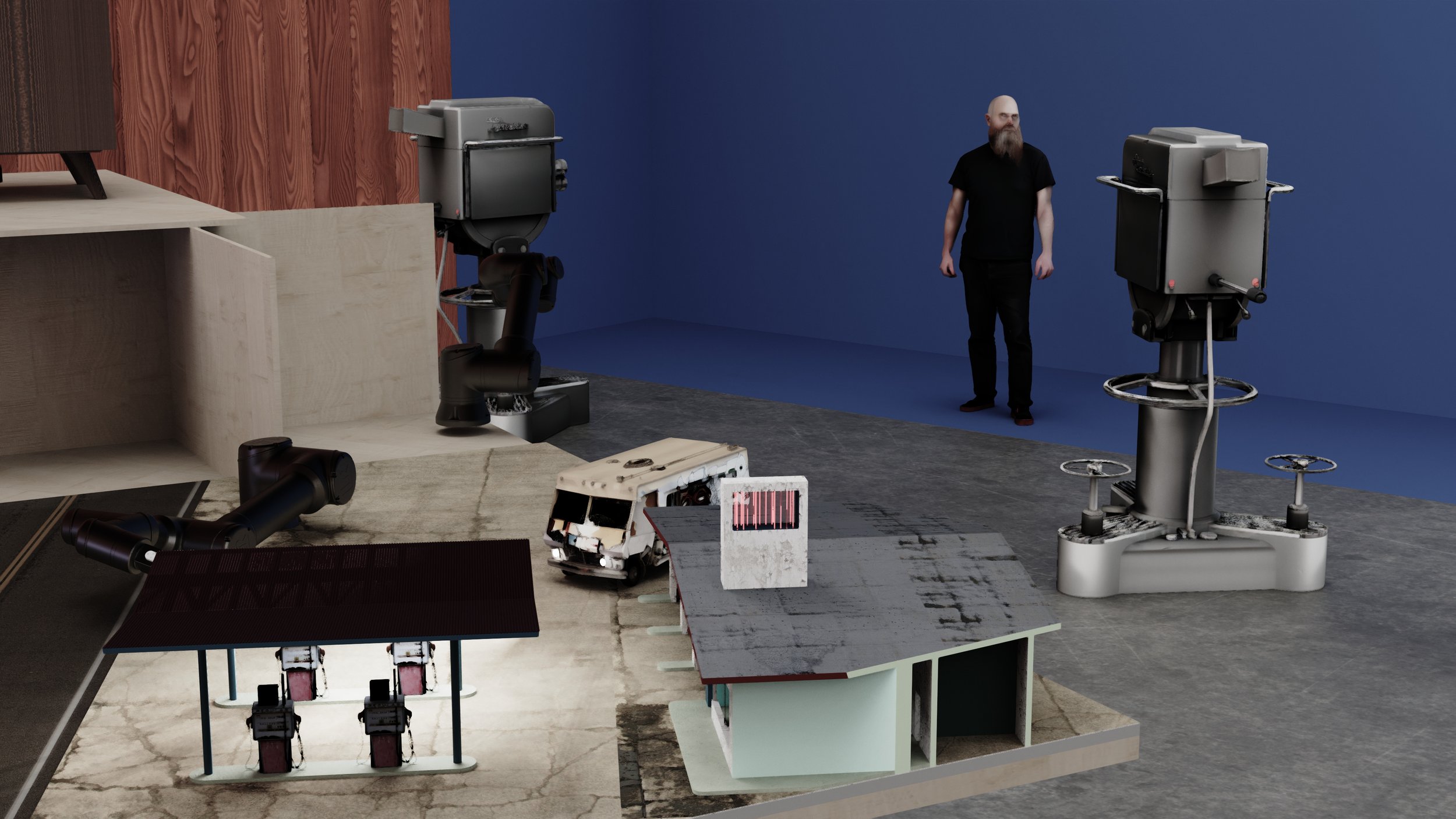
A 1960s living room glows at one end of the gallery, complete with mid-century furniture and the light of a period television. In the center, a line of miniature sci-fi TV sets, tiny soundstages that feel like lost episodes of Star Trek or The Twilight Zone, suggest fragments of an unfinished story. At the far end, a bank of teleprompters and a greenscreen studio invite visitors to step in as actors, anchors, and hosts. Reading from scripts or improvising, they insert themselves into this mid-century TV universe. Their performances are composited with prerecorded material, so the show is never complete until someone inhabits it.
Conceptual Frame (Play & Tensions)
TV Show is grounded in a persistent human desire: the longing to belong to a coherent story, to feel situated within a narrative larger and more meaningful than the fragmented conditions of everyday life. Here, that desire isn’t simply fulfilled; it is staged and examined. The 1960s living room, miniature sets, and studio act as propositions, partial worlds that invite visitors in while deliberately withholding resolution.
Before institutions or broadcast media, people made sense of the world by telling stories together. Small groups could invent explanations, values, and futures, and those shared fictions were enough to organize life. TV Show positions itself inside that same process: society as a structure of shared assumptions, some rigorously tested, many loosely held, about how the world operates. The teleprompter’s script, the canned reactions, and the tiny sci-fi soundstages all become tools for collective speculation rather than a pipeline for fixed truth.
Most of what governs contemporary life arrives mediated, through chains of trust: experts, institutions, witnesses, and storytellers we rarely see directly. The installation asks visitors to play with those chains by stepping into roles usually reserved for professionals, an anchor, an actor, a director, and feeling how easily a "convincing" story can be assembled from fragments and modified towards specific ends. In contrast to fully polished media, this piece keeps the seams visible: cameras, sets, and prompts are never fully hidden, so participants confront the mechanics of meaning-making rather than disappearing into seamless illusion.
Rather than presenting a single finished narrative, TV Show operates as an open structure where representation, trust, and authorship remain unstable. Each group’s performance overwrites the last, and no definitive episode is ever recorded as canon. Play becomes a way of rehearsing how realities are built, maintained, and contested, reminding visitors that the worlds they move through, on screens and off, are provisional, negotiated, and always capable of being remade.
Structure of Participation
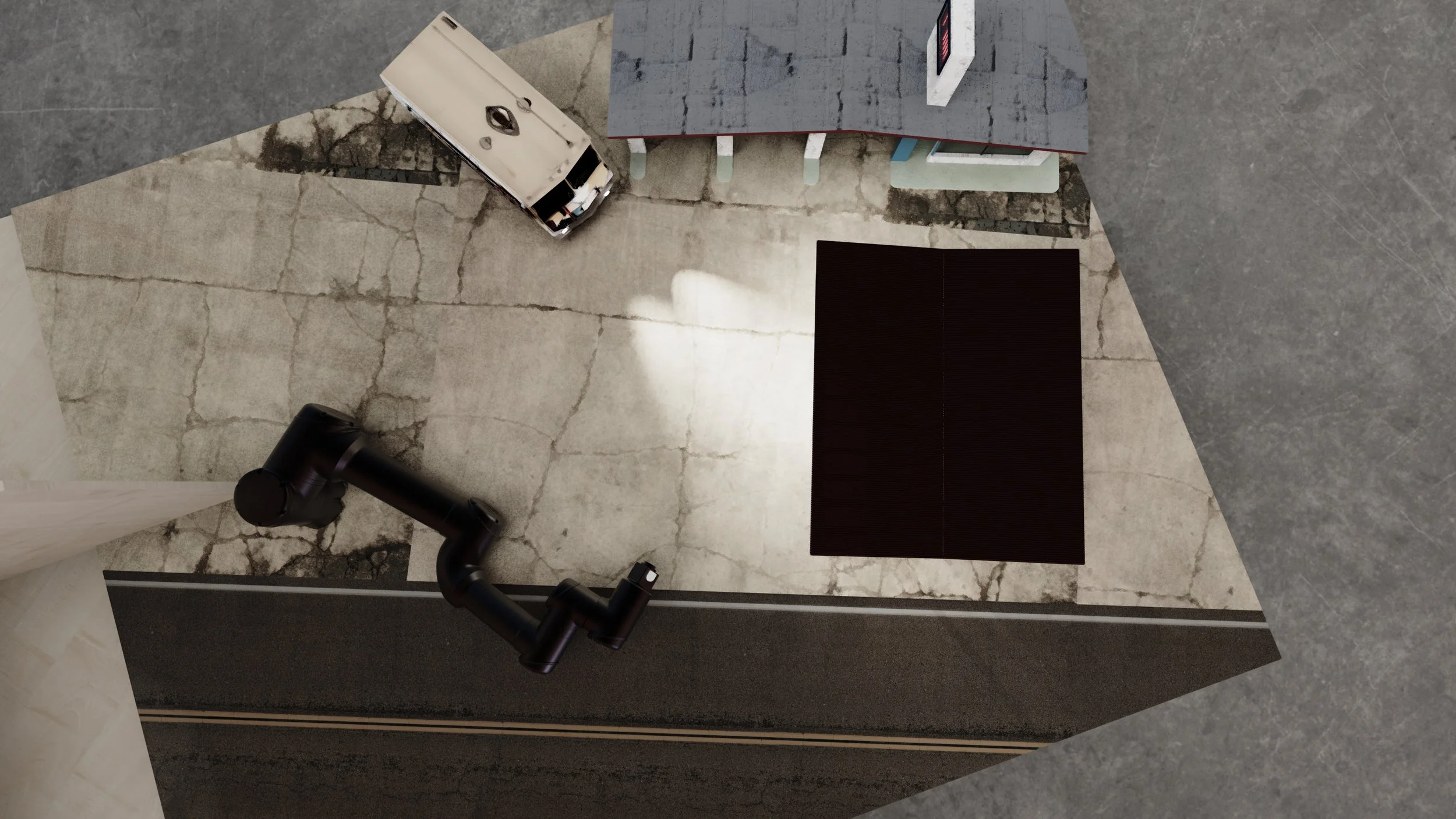
Type of space: Self-directed interactive room with zones—living room (viewer), miniature sets (world), studio (production).
Rules: A mix of written prompts (teleprompter text, simple on-screen cues) and trial and error; visitors can follow the script or go off-book.
Guidance: A staff member can reset scenes and lightly encourage participation, but is not a performer; the system runs autonomously.
Intervals: Works well with timed groups who move through the space, with overlapping casts emerging as people arrive and leave mid-episode.
Social Dynamics
The installation encourages a mix of collaboration and gentle embarrassment: some visitors perform while others operate cameras or simply watch from the living room. People negotiate who reads which lines, who plays which character, and how seriously to take the script. The framing is clear: the room, the sets, and the studio are the only interfaces, making it obvious that the "game" is to collectively assemble a show out of mismatched pieces.
Requirements & Support
Run time: Designed for a continuous 4+ month run with robust AV hardware and simple reset procedures.
Space: Flexible within a 1000–3000 sq ft envelope; ideally zoned so living room, miniature sets, and studio are distinct but visually connected.
Staff & expertise: Set fabricator, miniatures builder, lighting designer, and AV technician for creation; daily supervision by gallery staff trained to handle basic media systems and sanitizing shared props.
Saleable elements: Individual miniature sets or components of the living-room environment can be editioned as sculptural works after the run, while the interactive core remains adaptable for future iterations. A recording of each performance can be purchased. Performance images can be collaged into a movie poster.